How Much Sun is Too Much for Kids? A Dermatologist's Guide
How Much Sun Is Too Much for Kids? A Dermatologist's Guide
Most parents have a routine for the pool: sunscreen, a hat, maybe a reminder to reapply. Fewer have a real answer to the question underneath it - how much sun is actually too much? For kids, the answer is different than it is for adults, because their skin is thinner and more sensitive. That difference changes how fast damage happens and how easy it is to miss.
Kids' Skin Plays by Different Rules
A child's skin doesn't just look more delicate than an adult's. It functions differently. It's thinner, which means UV rays reach deeper, faster. That's the reason a sunburn that takes a full beach day to show up on an adult can show up on a child in a fraction of the time, and why the general rules of thumb built for grown-up skin don't automatically apply to kids.
The Two Kinds of Sun Damage: UVA and UVB
There are two types of UV radiation to know about, and they don't do the same thing to skin:
- UVA makes up roughly 95% of the UV radiation that reaches us (Skin Cancer Foundation). It goes deeper into the skin and is the main driver of long-term skin aging.
- UVB shows up less often but hits harder. It doesn't get past the outer layer of skin, and it's the direct cause of sunburn.
Both play a role in skin cancer risk.
Darker Skin Isn't "Protected" Skin
When skin is exposed to UV rays, cells called melanocytes produce melanin, the pigment that makes skin darken. That darkening isn't a sign of protection kicking in, it's a stress response. The skin is producing more pigment to try to limit further DNA damage. It's not the skin "toughening up," and it's not a green light to stay out longer.
Sunburn is a step further than that. The immune system reacts to UV-damaged skin cells by dilating blood vessels and sending inflammatory cells to the area, which is what causes the redness, heat, and pain. That reaction can take several hours to fully show up, so a child who looks fine at 3pm can be visibly sunburned by dinner. Fair-complexion kids burn faster because they produce less melanin, but any child can burn with enough exposure. In severe cases, too much sun can cause second-degree burns with blistering, fever, and chills. Neither the darkening of skin nor sunburn is a useful signal for "how much sun is okay." Both mean the overexposure already happened.
Sunburn isn't the Only Risk
Sunburn gets the attention, but it isn't the only negative consequence of too much sun for a child.
Dehydration
Kids sweat to cool down, and in hot conditions they lose fluids fast. Because children have a higher surface-area-to-body-mass ratio than adults, they can dehydrate more quickly during extended outdoor time. Water breaks matter as much as sunscreen does.
Heat Illness - Cramps, Exhaustion, and Heat Stroke
Heat illnesses runs on a spectrum, and frequently accompanies a bad sunburn:
- Heat cramps (mildest): painful muscle cramps. What to do: rest in shade, rehydrate
- Heat exhaustion: cool, clammy skin, possible fever, irritability, fainting, heavy sweating. What to do: move the child to a cool place, rehydrate, and call your pediatrician. Some cases need IV fluids.
- Heat stroke (most severe): hot, dry skin, no sweating, fever, seizures, weakness, dizziness, loss of consciousness. What to do: This is a medical emergency. Get emergency care immediately.
Skin Cancer in Kids and Teens
Melanoma is rare in kids, but it's the most common skin cancer diagnosed in that age group, accounting for about 3% of all cancers in adolescents ages 15-19. (National Cancer Institute).
Dermatologists use the ABCDE method to check for concerning moles:
- Asymmetry
- Border Irregularity
- Color Variation
- Diameter larger than about 1/4 inch
- Evolving in Size, Shape, or Color over time
How to Keep Outdoor Time Safe
- Know your child's skin type. Sun response varies by Fitzpatrick type. Read our guide to Fitzpatrick skin types to find out where your child falls and what it means for their risk.
- Avoid peak hours. UV is strongest roughly 10 a.m. – 4 p.m.
- Use broad-spectrum SPF 30+. Reapply every 1-2 hours outdoors, more often after swimming.
- Don't skip lips, ears, and the scalp - commonly missed spots
- Use SPF clothing and hats to cut down on direct exposure.
Check the UV Index Before You Head Outdoors
The EPA publishes a free UV Index tool by ZIP code: epa.gov/sunsafety/uv-index-1. Check it before planning outdoor time, and adjust sun protection base don your child's skin type and the day's index, not just how hot it feels outside.
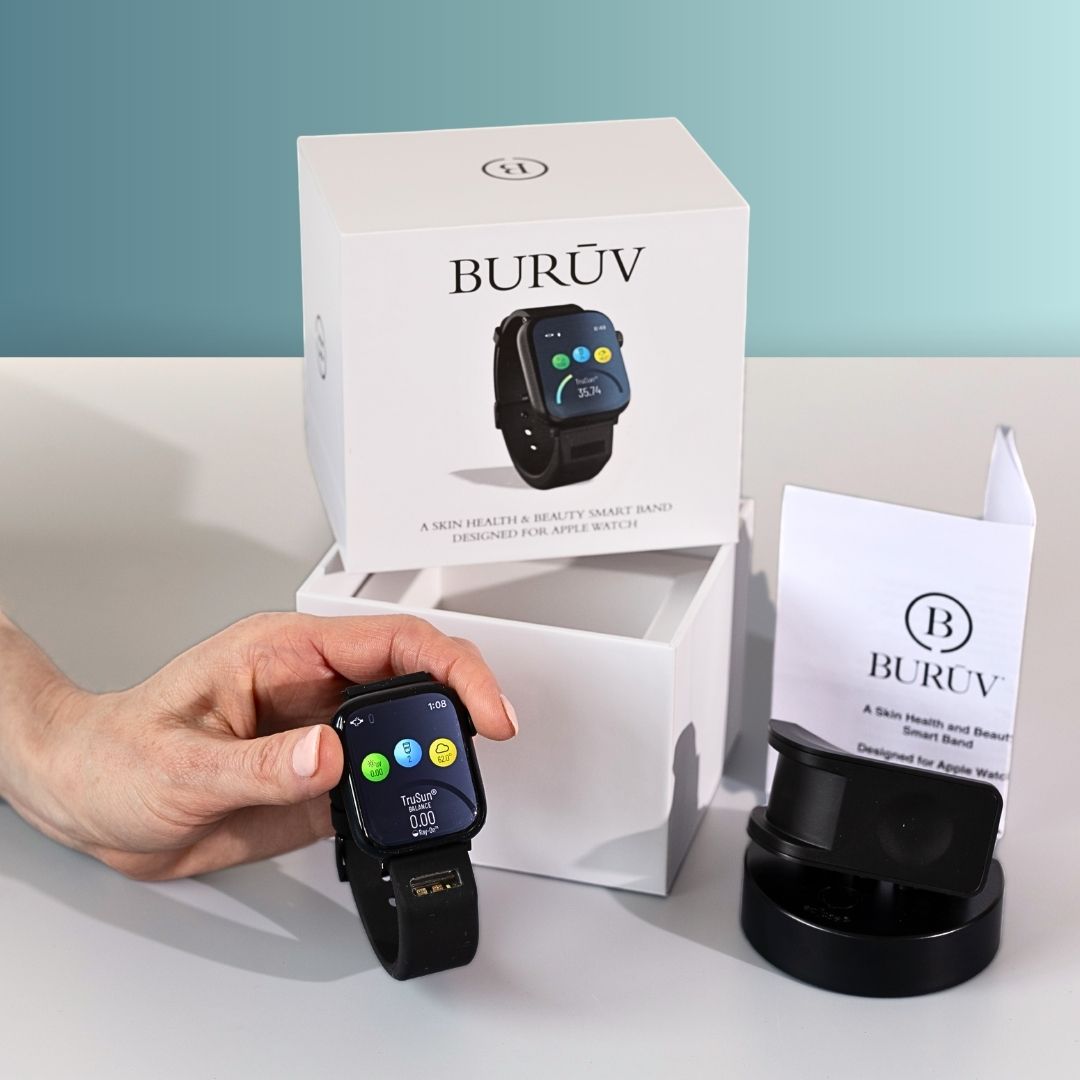
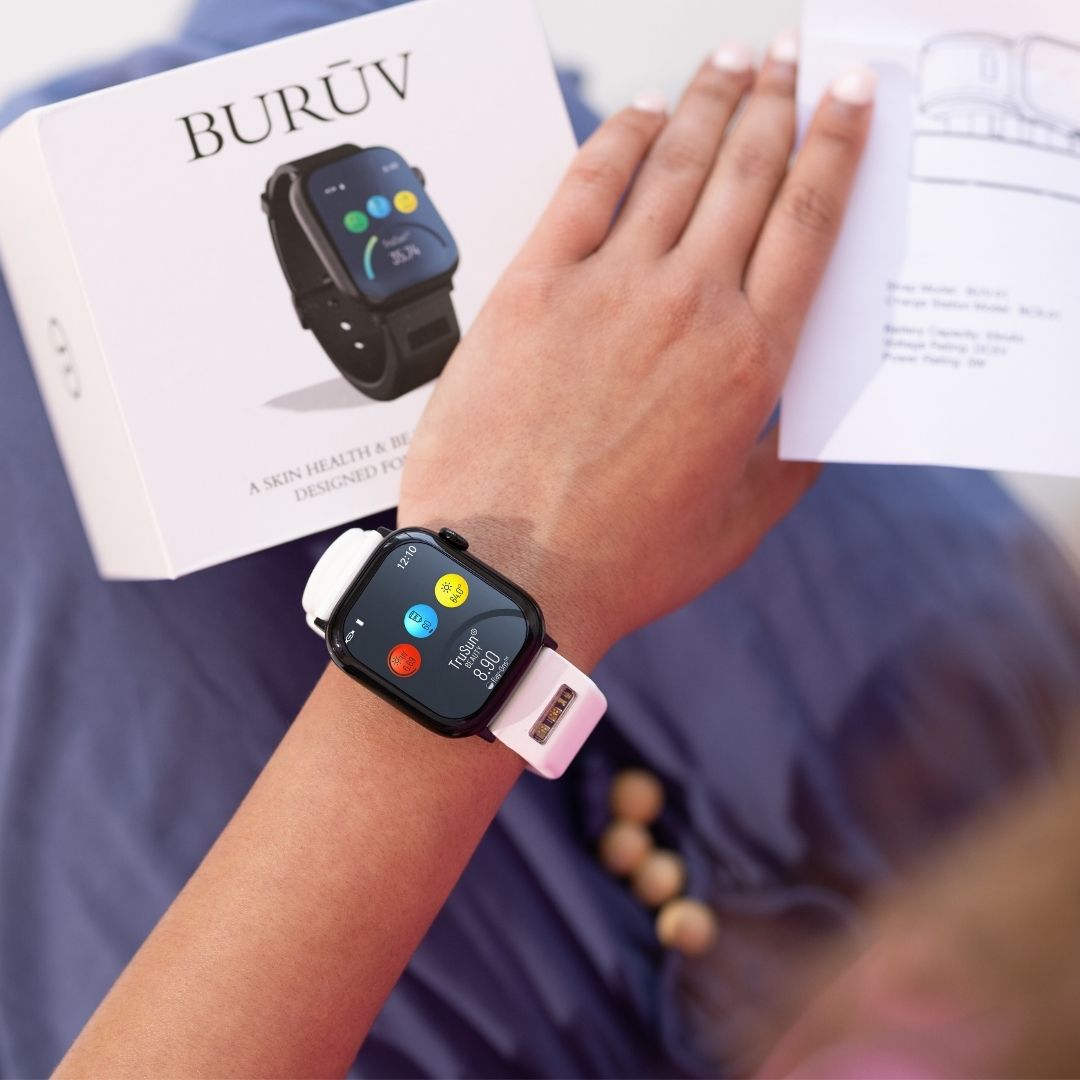
Knowing how much sun is too much isn't about keeping kids indoors. It's about knowing what's happening to their skin before it shows up as a burn, a rash, or years down the line as damage you can't undo. BURŪV® helps you see UV before the damage shows. Parents who wear the BURŪV® smart band for Apple Watch® will get a clear, real-time read on their own sun exposure, built on TruSun® technology and dermatologist-founded science.
BURŪV is a general wellness product and is not a medical device. It is not intended to diagnose, treat, cure, or prevent any disease or medical condition.
Apple Watch® is a registered trademark of Apple Inc.