What's Your Skin Type? A Dermatologist's Guide to Sun Damage Risk
BURŪV uses the Fitzpatrick phototyping scale to estimate how your skin responds to ultraviolet (UV) light. Dermatologists developed this scale in 1975 to classify skin by pigment level and how skin reacts to sun exposure.
Every skin type carries some risk of skin cancer, including melanoma. Deeper pigment lowers visible burn risk, but it does not remove the risk. In darker skin, melanoma often shows up in less visible places, like the palms, soles, or under the nails.
Knowing your skin type can help predict your overall risk of sun damage and skin cancer. Use the guide to determine your particular skin type.

Skin Type Derm Tip:
Every skin type should use an SPF of at least 30, and higher if yu have a light complexion. Sunscreens differ in formula and protection level, so it is important to learn which brands provide the best protection for your skin type. Dr. Matthys believes the best sunscreen is the one you will use everyday.
What is the Fitzpatrick Skin Type Scale?
The Fitzpatrick scale sorts skin into six types, based on burn tendence and how much teh skin darkens with sun exposure. The original definitions used terminology that wasn't written very inclusively for people with darker skin tones, so we've adjusted that language in hopes of helping more people find their skin type accurately.
Skin type, as factored by the BURUV app, is a starting point for understanding your baseline sun risk, not a full skin assessment on its own.
Skin Type 1
You might be a Skin Type 1 if you:
- Have pale, white skin
- Have red or blond hair
- Have blue eyes
- Have freckles
- Always burns and never "tans" or darkens with exposure

People with Skin Type 1 always burn in the sun, and their skin never darkens with UV exposure. They are highly susceptible to skin damage and skin cancers like basal cell and squamous cell carcinoma. They also carry high risk for melanoma.
Sun-smart Actions for Skin Type 1
For sun-smart protection, Skin Type 1 should:
- Use sunscreen with an SPF of 30 or higher
- Wear protective clothing with a UPF rating of 30 or higher
- Seek shade between 10am and 4pm
- Do monthly skin checks, head-to-toe, looking for any new or changing moles or suspicious growth
- Visit a dermatology office to evaluate a new or changing mole
- Get a professional skin exam every 6 to 12 months
Skin Type 2
You might be a Skin Type 2 if you:
- Have white or fair skin
- Have red or blond hair
- Have blue, hazel, or green eyes
- Have freckles
- Burns very easily, and does not "tan" or darken easily with exposure

People with Skin Type 2 burn very easily in the sun, and their skin does not darken very easily with UV exposure. They are highly susceptible to skin damage and skin cancers like basal cell and squamous cell carcinoma. They also carry increased risk for melanoma.
Sun-smart Actions for Skin Type 2
For sun-smart protection, Skin Type 2 should:
- Use a sunscreen with an SPF of 30+
- Wear protective clothing with a UPF rating of 30 or higher
- Seek shade between 10am and 4pm
- Do monthly skin checks, head-to-toe, looking for any new or changing moles or suspicious growth
- Visit a dermatology office to evaluate a new or changing mole
- Get a professional skin exam every 6 to 12 months
Skin Type 3
You might be a Skin Type 3 if you:
- Have cream or fair skin
- Have dark blond to brown hair
- Have blue or brown eyes
- Experience mild burns, and only "tans" or darkens gradually

People with Skin Type 3 sometimes burn and/or may see their skin darken gradually from sun exposure. They are susceptible to skin damage and skin cancers like basal cell and squamous cell carcinoma. They also carry increased risk for melanoma.
Sun-smart Actions for Skin Type 3
For sun-smart protection, Skin Type 3 should:
- Use a sunscreen with an SPF of 30+
- Wear protective clothing with a UPF rating of 30 or higher
- Seek shade between 10am and 4pm
- Do monthly skin checks, head-to-toe, looking for any new or changing moles or suspicious growth
- Visit a dermatology office to evaluate a new or changing mole
- Get a professional skin exam every 6 to 12 months
Skin Type 4
You might be a Skin Type 4 if you:
- Have medium skin tone
- Have dark blond to brown hair
- Have brown eyes
- Rarely burn, and have skin that darkens with ease

People with Skin Type 4 tend to "tan" easily, meaning their skin darkens with sun exposure, and are less likely to burn in the sun. Even with darker skin pigment, they are still at risk for basal cell and squamous cell carcinoma, as well as melanoma.
Sun-smart Actions for Skin Type 4
For sun-smart protection, Skin Type 4 should:
- Use a sunscreen with an SPF of 30+
- Wear protective clothing with a UPF rating of 30 or higher
- Seek shade between 10am and 4pm
- Do monthly skin checks, head-to-toe, looking for any new or changing moles or suspicious growth
- Visit a dermatology office to evaluate a new or changing mole
- Get a professional skin exam every 6 to 12 months
Skin Type 5
You might be a Skin Type 5 if you:
- Have dark brown skin
- Have brown or black hair
- Have brown eyes
- Very rarely burn, and have skin that darkens very easily

People with Skin Type 5 very rarely burn in the sun and have skin that darkens very easily. They are still at risk for basal cell and squamous cell carcinoma, as well as melanoma. In people with more pigmented skin, melanoma is more common in "hidden" places like the palms, soles or under nails.
Sun-smart Actions for Skin Type 5
For sun-smart protection, Skin Type 5 should:
- Use a sunscreen with an SPF of 30+
- Wear protective clothing with a UPF rating of 30 or higher
- Seek shade between 10am and 4pm
- Do monthly skin checks, head-to-toe, looking for any new or changing moles or suspicious growth
- Visit a dermatology office to evaluate a new or changing mole
- Get a professional skin exam every 6 to 12 months
Skin Type 6
You might be a Skin Type 6 if you:
- Have deeply-pigmented, dark brown skin
- Have black hair
- Have dark brown eyes
- Never burn, and have skin that may darken

People with Skin Type 6 do not burn in the sun, but their skin may still darken with sun exposure. Even though they do not burn, they are still at risk for basal cell and squamous cell carcinoma, as well as melanoma. In people with highly-pigmented skin, melanoma is more common in "hidden" places like the palms, soles or under nails.
Sun-smart Actions for Skin Type 6
For sun-smart protection, Skin Type 6 should:
- Use a sunscreen with an SPF of 30+
- Wear protective clothing with a UPF rating of 30 or higher
- Seek shade between 10am and 4pm
- Do monthly skin checks, head-to-toe, looking for any new or changing moles or suspicious growth
- Visit a dermatology office to evaluate a new or changing mole
- Get a professional skin exam every 6 to 12 months
Your Skin Type is Your Starting Point
Your Fitzpatrick type tells you your baseline risk. It does not tell you what today's sun exposure is actually doing to your skin. It does not factor the impact of UV over time.
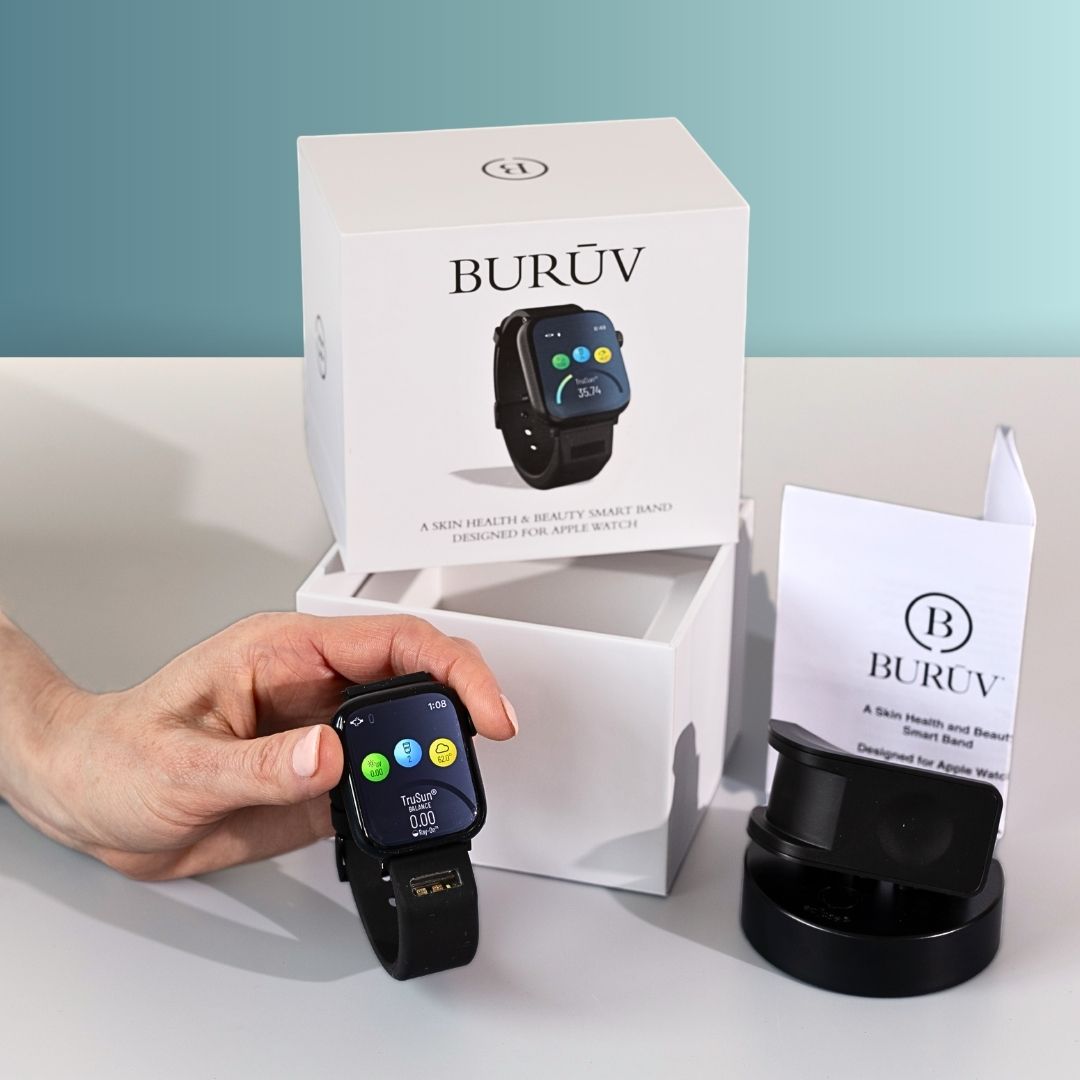
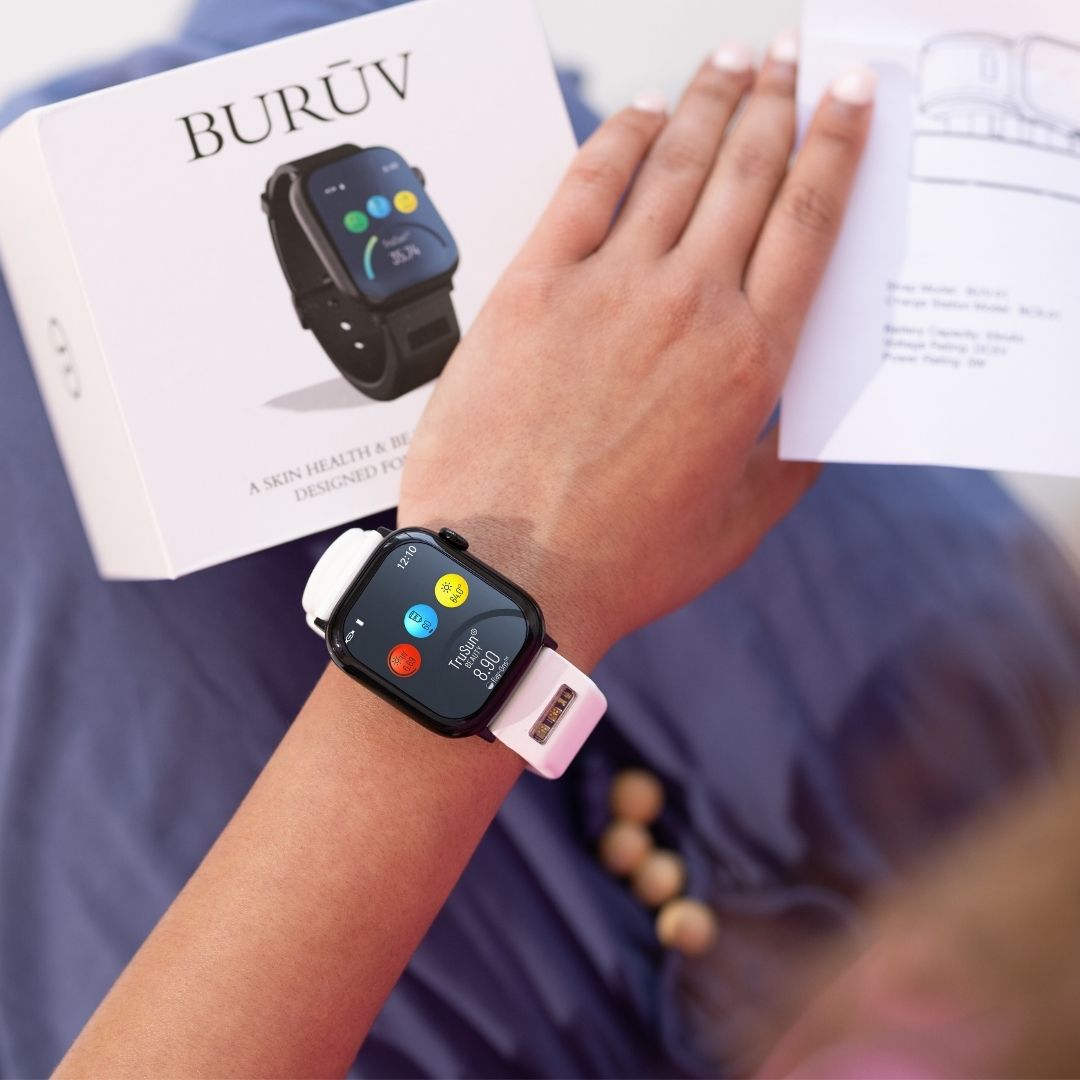
The sun-smart actions recommended for each skin type are identical because UV doesn't discriminate. BURUV turns your skin type baseline into actionable knowledge, daily. It senses today's real UV exposure, factors your SPF use and activity, and tells you when to seek shade or reapply. You get sun-smart prompts, perfectly timed for you and your skin type. Beautiful, healthy skin starts with knowing.