Sneaky Ways of UV Rays
SNEAKY WAYS OF UV RAYS
How much do you know about UV rays?
The amount of UV exposure you get every day may surprise you. If you think sunblock is for beach days and weekend tournaments, you are especially susceptible to sneaky UV.
You might have SPF in your face lotion or makeup. You might put on a hat when you know you’ll be in the sun all day. But UV rays don’t take vacation and they don’t care about your busy schedule.
So, how much harmful UV rays are you exposed to without even realizing it?

UNDERSTANDING UV INDEX
In the US the Environmental Protection Agency provides a UV Index to warn people about the daily risk for damage to skin and eyes based on how strong the sun’s rays are on any particular day.
If you have a teenage daughter, you are probably well aware of the trend tracking UV Index in order to intentionally tan themselves. (As a dermatologist, this makes me die a little inside.)
UV Index forecasts are calculated by the National Weather Service in collaboration with the EPA. While the score provided is a helpful starting place, actual intensity of UV radiation risk depends on other factors:
-
Time of day: UV rays are most intense when the sun is at its highest point
-
Time of year: UV radiation is more potent during the spring and summer months.
-
Latitude: Locations closer to the equator experience stronger UV radiation.
-
Altitude: UV exposure increases at higher elevations.
-
Cloud cover: Clouds can reduce UV radiation, but may not offer much protection.
-
Ozone levels: The ozone layer absorbs UV radiation; thinner ozone = higher UV levels.
-
Reflection: Surfaces like sand, water, and snow reflect UV radiation.
-
Individual Skin Type: The less natural melanin in skin, the greater the risk.

UV RAYS ARE RADIATION
There is no use sugarcoating this fact — UV Rays are radiation. Radiation causes damage on a cellular level.
In 2008, the tanning industry published a full-page advertisement in The New York Times that read “Go get a tan. Your body will thank you.” boldly dismissing the clear association between indoor tanning and melanoma. As a dermatologist, this messaging reminds me of old cigarette commercials and ads. The industries know they’re in the wrong and they care more about profit than your health & safety.
Culturally, we’ve grown so accustomed to “tanning” as a desirable aesthetic, that it’s easy to forget every change to the color of our skin indicates radiation damage.
Long term, this doesn’t just age us, it causes mutations like skin cancer.
HOW DOES RADIATION DAMAGE THE BODY?
Radiation falls into two main categories: ionizing and non-ionizing. (In case you forgot 6th grade science, ions are atoms that have an electrical charge.)
Ionizing radiation can cause damage to cells and DNA within them. It can result in nausea, vomiting, burns, and immune system damage. Long term, ionizing radiation increases the risk of cataracts, cancer, and dysfunction in reproductive and nervous systems.
Non-ionizing radiation produces heat that can burn or damage skin and vision. It also ages our skin, causing wrinkles, hyperpigmentation, and loss of collagen.
FUKUSHIMA, CHERNOBYL, AND THREE MILE ISLAND
The names of these major nuclear accidents are well-known and caused lasting damage to the people and environment nearby.
But the effects of these disasters are also far-reaching. As recently as Summer 2025, shrimp imported from Indonesia tested positive for Cs-137 (Cesium), a radioactive element produced by nuclear fission. While the exact source of this contamination is still under investigation, the distance between where it was processed (Jakarta) and the known nuclear accidents is significant.
The connection between the nuclear disasters and UV Rays is human error.
If you would not knowingly eat shrimp that sets off radioactive screening, why would you knowingly bathe in the sun’s UV rays?
FOUR PLACES WHERE UV RAYS SNEAK IN
NAIL SALONS
Don’t let the prevalence of nail salons and the UV Lamps used to cure gel polish and nail extensions fool you. They are not without risk.
While the level of UVA radiation emitted by these devices is relatively low, the sneakiest way UV rays affect you is cumulative. In other words, repeated exposure accelerates the effects.
For devotees of nail culture, this can result in premature aging of the skin on your hands, increased skin cancer risk on your hands, and even DNA damage.
Taking precautions like applying sunscreen to your hands before using the lamps and wearing fingerless gloves or draping a cloth over your hands can help minimize the UV exposure. Even better, skip the nail treatments that require UV light altogether.

DRIVING
Speaking of hands, here’s a bit of good news — most car windshields offer UVA light protection. In fact, the most-cited study¹ shows that windshields block an average of 95% of UV-A rays. That isn’t just great for your hands, it’s good for your eyesight too!
The less-good news is that side windows and sun/ moon roofs provide significantly less protection, unless you’ve added the option after market or when you purchase your vehicle.
In fact, research published² in the Journal of the American Academy of Dermatology showed a slight increase of cancer on the left than right (52.6% v. 47.4%), but a significant increase in malignant melanoma on the left than the right (74% v. 26%).
The finding was more pronounced in men who, traditionally, spent more time driving vehicles over the course of their lifetime. In the last 25 years, however, the number of vehicles per household has nearly doubled, making it more likely that women are spending more time driving vehicles now.³
Put yourself in the driver’s seat when it comes to protecting yourself from the sneaky ways of UV rays while driving:
-
Apply a broad-spectrum SPF of 30 higher to any exposed skin.
-
Install UV protectant film to vehicle windows. UV films do not always need to be tinted, they can be clear as well.
-
Wear clothing containing Ultraviolet Protective Factor (UPF). You can also wash your clothes with SunGuard® if they do not have a UPF. SunGuard®adds UPF to your clothing and typically lasts up to 20 washes.
-
Wear a hat and sunglasses. Protect your eyes. Ensure your sunglasses are rated with UVA/UVB protection.

WINDOW SEAT, PLEASE
Just like the windows in a car, most “window seats” will expose you to much more UV than you expect. Restaurant tables, office desks, and even airplane seats near windows with sunlight streaming through put you at risk for too much sun.
Airline crews, in particular, have twice the incidence of melanoma as the general population,⁴ at least in part due to the stronger (and prolonged) UVA/UVB exposure at higher altitudes.
So, what? Are you supposed to sit in the dark like a mushroom? No, of course not. Get the view, people watch, and enjoy the warmth and flattering golden hour light. But consider taking precautions with spaces you own and using protection in spaces you don’t.
For example:
-
TREAT YOUR WINDOWS with UVA and UVB filters:
-
3M Home Window Film Solutions
-
UV Window Treatments from Home Depot
-
UV Window Treatments from Lowes
-
MAKE SUNSCREEN PART OF YOUR EVERY DAY ROUTINE
-
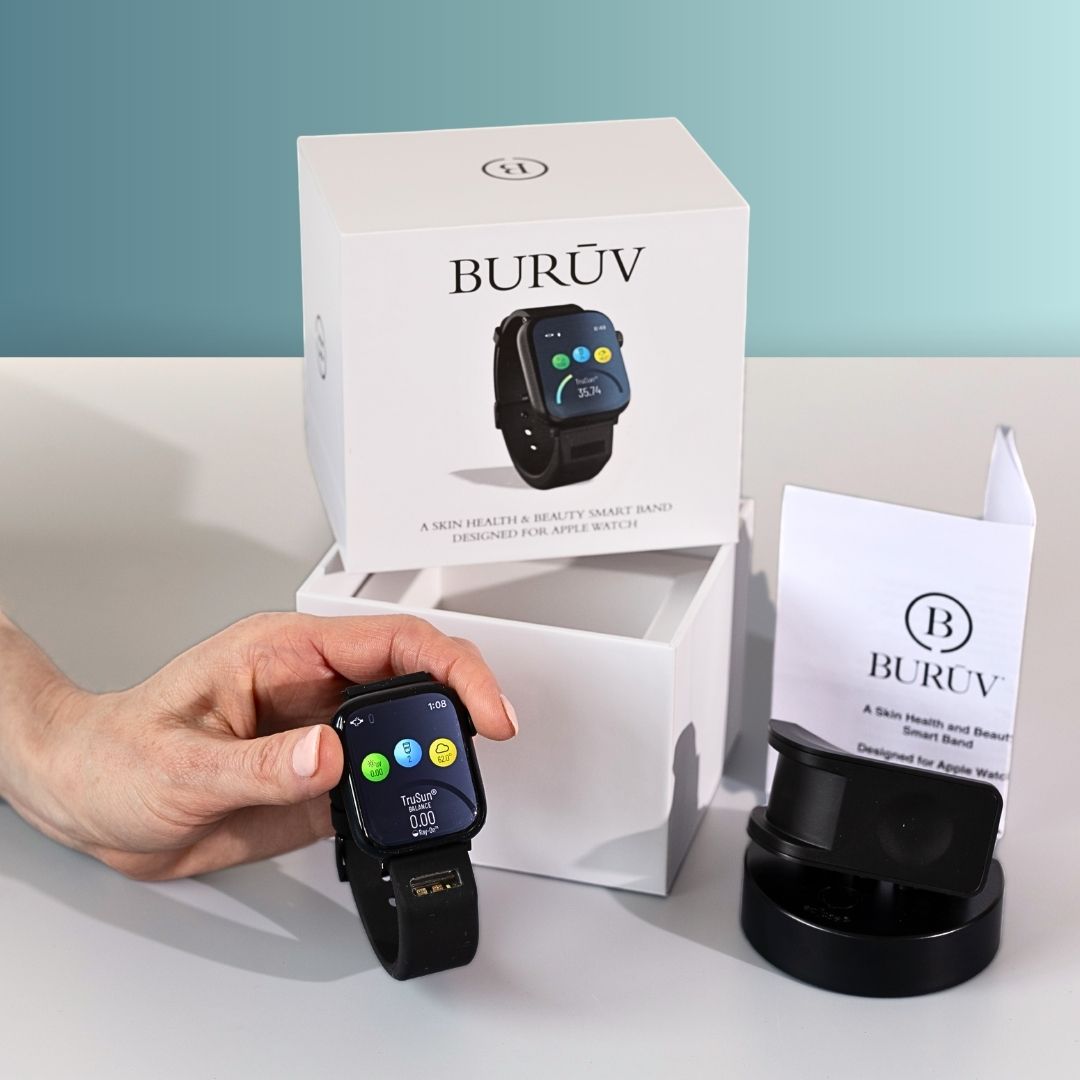
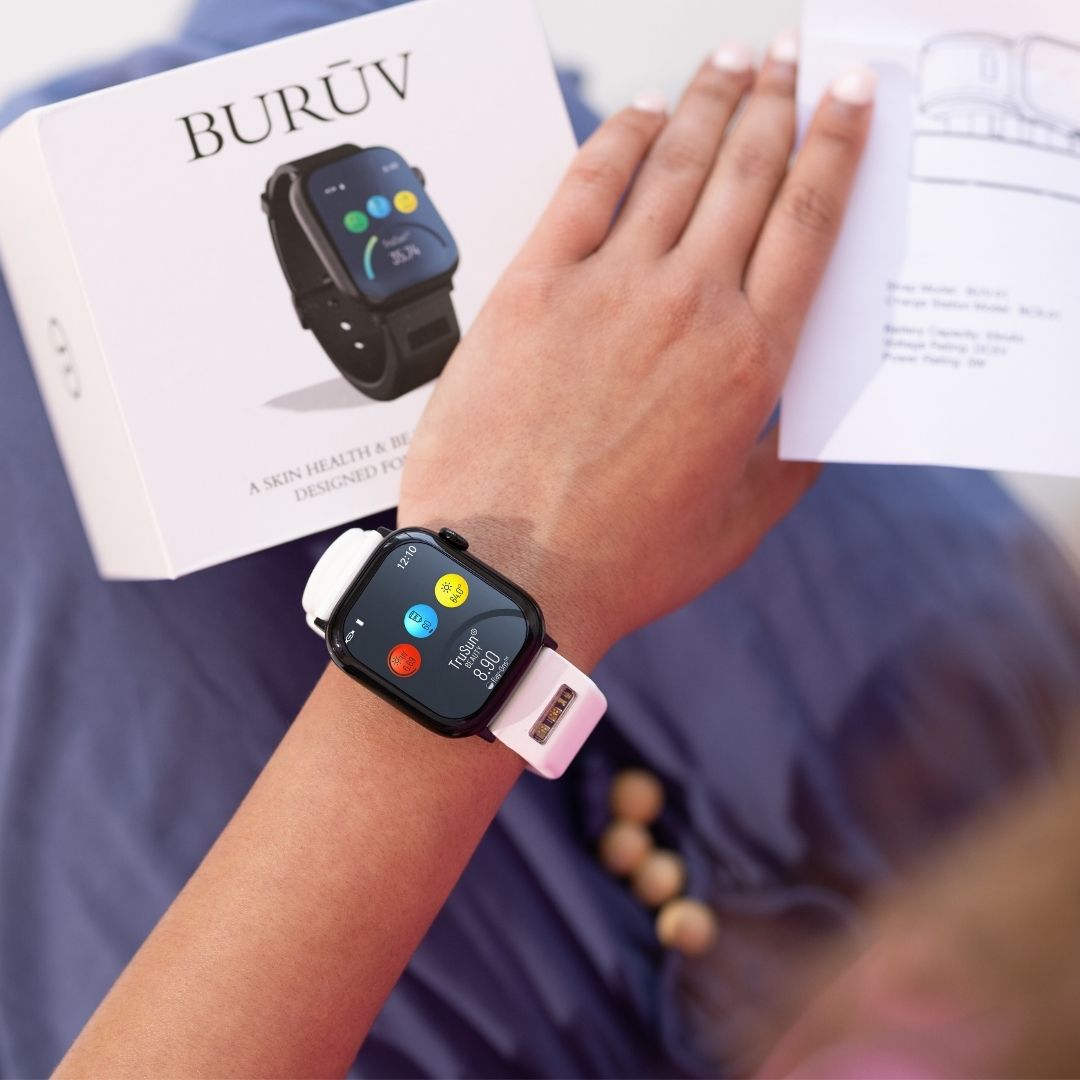
ADD BURŪV smartband to your Apple Watch for personalized alerts for when you’ve exceeded your UV limit so you can take action

CLOUDY DAYS & SNEAKY RAYS
Have you ever been out on an overcast day only to come home with the worst sunburn of your life? You aren’t alone. When the sunlight is beating down on you, it’s easy to remember to put on a hat, sunscreen, and sunglasses.
According to the Skin Cancer Foundation, up to 80 percent of the sun’s UV rays can pass through clouds. So if you haven’t put on a protective layer of sunblock or shade hat, those rays are coming for you unfiltered, resulting in serious sunburns and skin damage.⁵
Making sunsmart decisions part of your every day means you won’t be tricked by these sneaky ways of UV rays. You don’t have to fear the sun. A little preparation to protect your skin means you can absolutely LUV Life Outdoors and still LUV your skin.
SHOP BURŪV
¹Boxer Wachler. “Assessment of Levels of Ultraviolate A Light Protection in Automobile Windshileds and Side Windows. JAMA Ophthalmo 2016
²Increased prevalence of left-sided skin cancers. Butler, Susan T. et al.
Journal of the American Academy of Dermatology, Volume 63, Issue 6, 1006 - 1010
³McGuckin N, Liss S. Aging cars, aging drivers: important findings from the National Household Travel Survey. Institute of Transportation Engineers 2005; 75(9):30-37.
⁴The Risk of Melanoma in Airline Pilots and Cabin Crew A Meta-analysis. JAMA Dermatol. Author manuscript; available in PMC: 2015 Jun 26.
⁵The Skin Cancer Foundation’s Guide to Sunscreens. (2018, October 29). Retrieved from https://www.skincancer.org: https://www.skincancer.org/prevention/sun-protection/sunscreen/the-skin-cancer-foundations-guide-to-sunscreens